

I had the idea to write a blog on “How We Measure” like three years ago but never really followed through. Was thinking last night that I should start it back up.
How We Measure lies in tension between these two quotes:
“You can’t manage what you don’t measure” by Peter Drucker
“ When a measure becomes a target, it ceases to be a good measure” (Goodhart’s Law)
Because at first glance, it’s a damned if you do, damned if you don’t situation. Anyone that’s managed a project, a team, or an outcome knows that flying blind with no metrics to go off of is probably worse than leaving it up to chance.
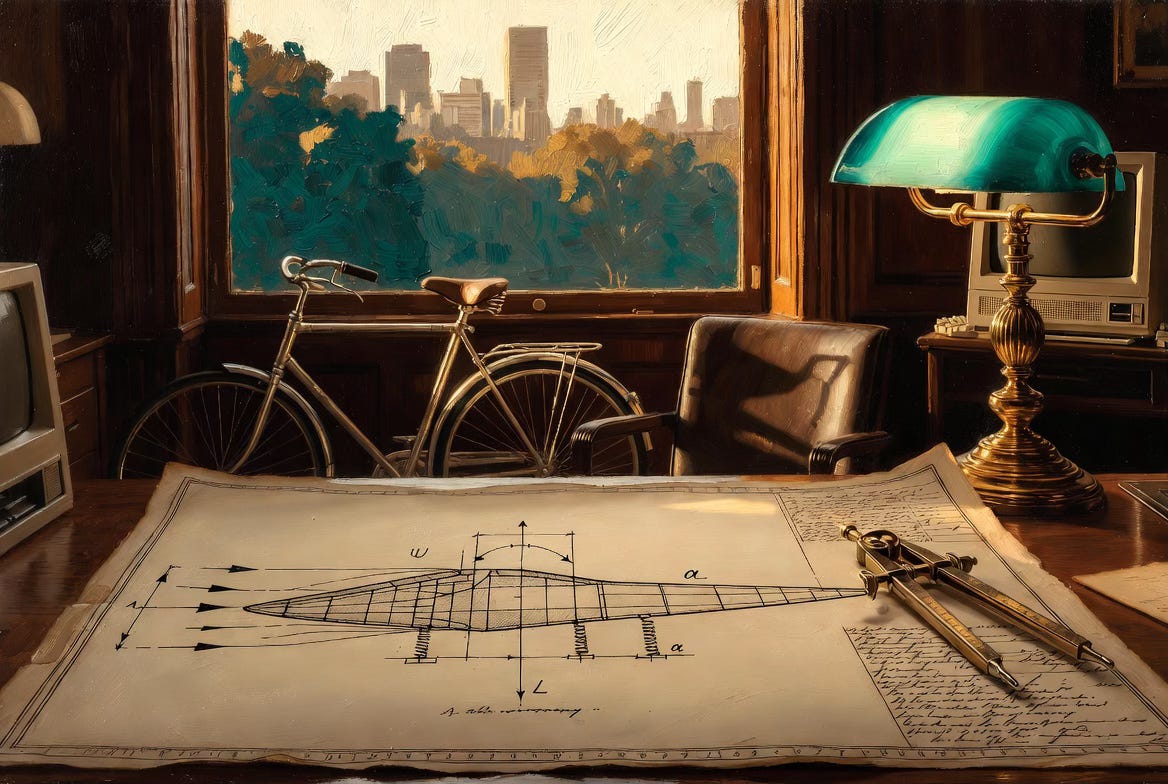
Actually, some of humanity’s greatest inventions were actually downstream of novel ways of measurement. The Wright Brothers, for example, invented a more precise wind tunnel to test the lift and drag coefficients of different wing shapes. Applying this novel form of measurement allowed two bike repair guys to do what every renowned physicist said was impossible.
But the other side of the coin is that metrics can and will be gamed. Think of public companies using shady accounting practices to hit a quarterly earnings target, the student replacing “because” with “due to the fact that” in an essay to hit 2000 words, or your buddy who claims to bench 225 but the range of motion is like three inches.
How We Measure is an interesting problem situated between the empirical and the human. If you’d like to follow along I’ll be posting something short on it every day.